
Engineering and Implementation Made in Austria

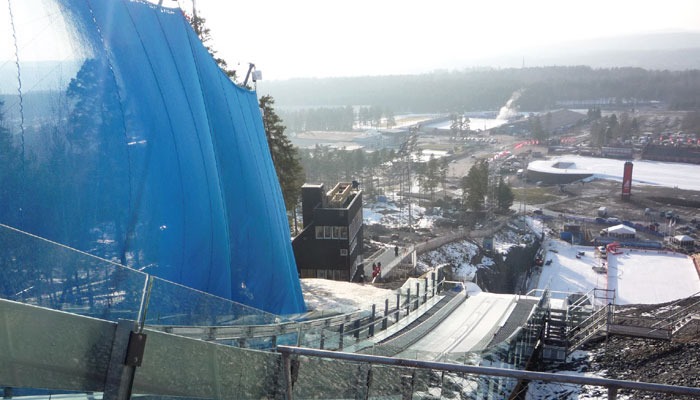
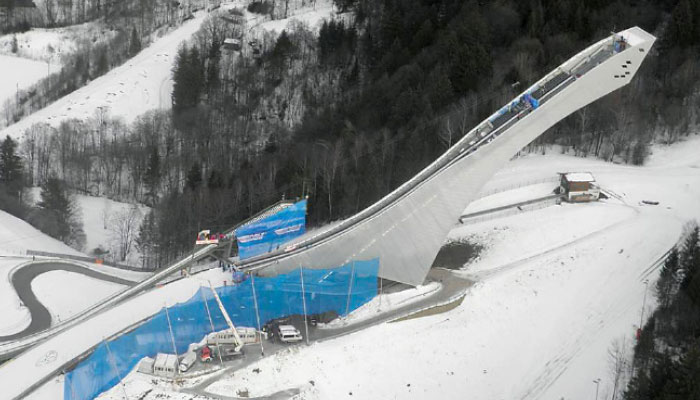
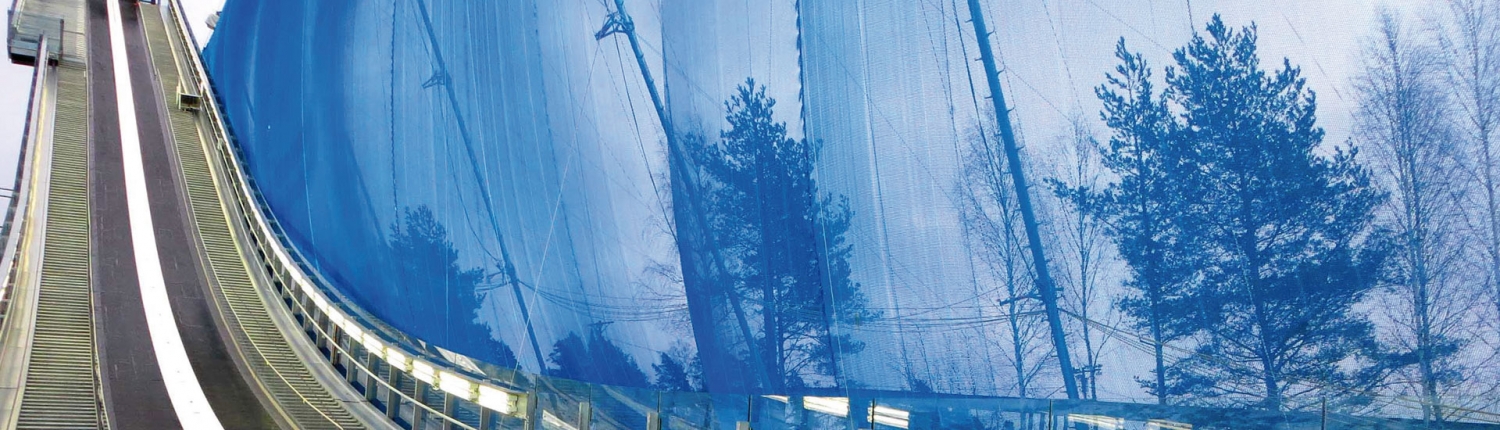
In addition to the staples of the Four Hills Tournament, Alpina wind net systems were also used at the 2016 Ski Flying World Championships in Kulm, the next challenges were in Seefeld with the 2019 Nordic Ski World Championships and in Oberstdorf/D 2021. Projects in Klingenthal/D and Kulm/A were also successfully implemented.

Research & Development

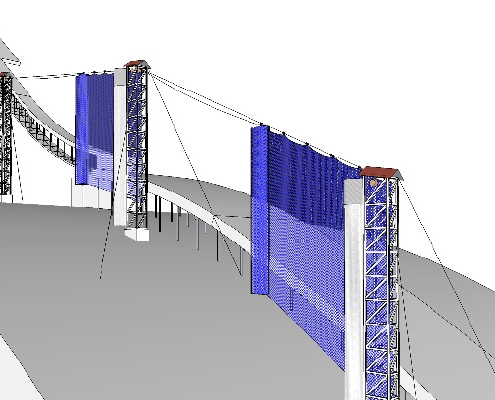
Using a 3D computer program, Alpina Sicherheitssysteme is able to check all ski jump facilities for wind issues and can offer customers adequate solutions with Alpina wind net systems to drastically minimize the financial risks caused by wind-related event cancellations. This program also enables the clarification of camera-related requirements for TV productions in advance. The main focus is on turnkey and multi-use solutions: In the future, monumental structures should serve as venues for sports and entertainment, not just a single field. The entire required, multi-functional infrastructure, such as stages, lighting, wind net systems, video screens, sporting requirement profiles, and backstage requirements, etc. are already included in the planning phase.

Projects & References

FIS Ski Jumping Events:

  • FIS Ski Jumping Winter Opening Klingenthal/DE
  • Ski Flying Kulm
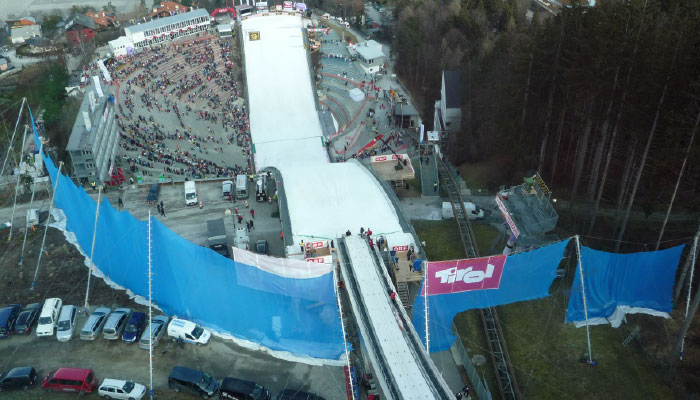
  • FIS 4 hills tournament / Vierschanzentournee
  • Garmisch-Partenkirchen/DE,
  • Bergiselspringen/AT
  • Oberstdorf/DE
  • FIS Nordic World Ski Championships Ramsau/Dachstein 1999
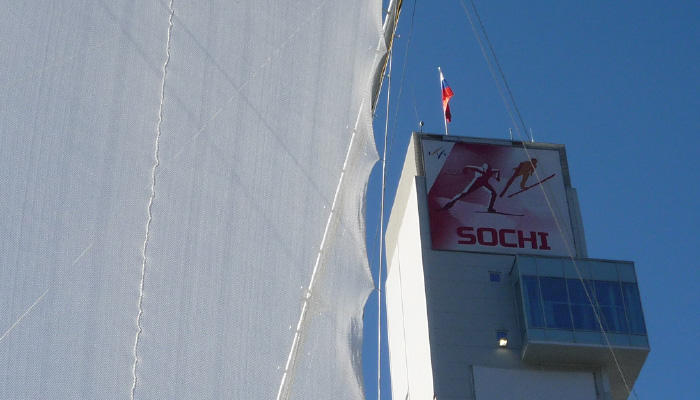
  • Sochi 2014 Winter Olympics
  • FIS Ski Jumping World Cup Falun 2014
  • Sochi 2014 Winter Olympics
  • FIS Nordic World Ski Championships Falun 2015
  • FIS Nordic World Ski Championships Seefeld 2019
  • FIS Ski Jumping World Championships Kulm 2016
  • FIS Nordic World Ski Championships Oberstdorf 2021
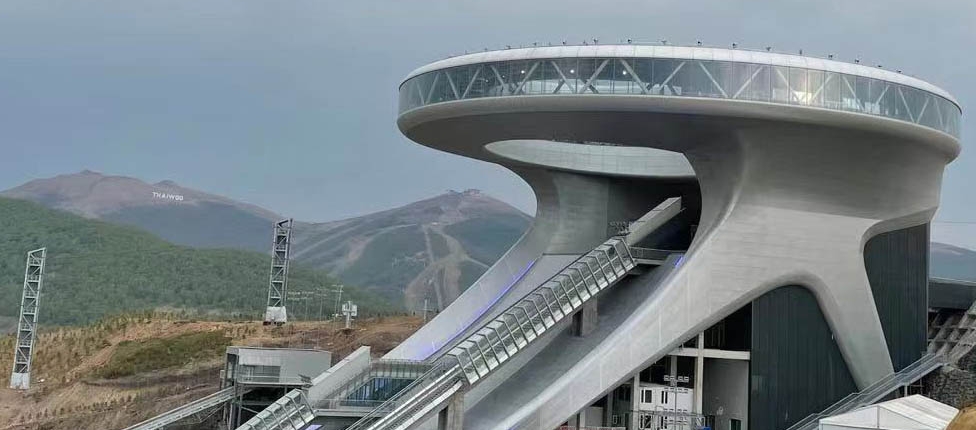
  • Beijing 2022 Winter Olympics

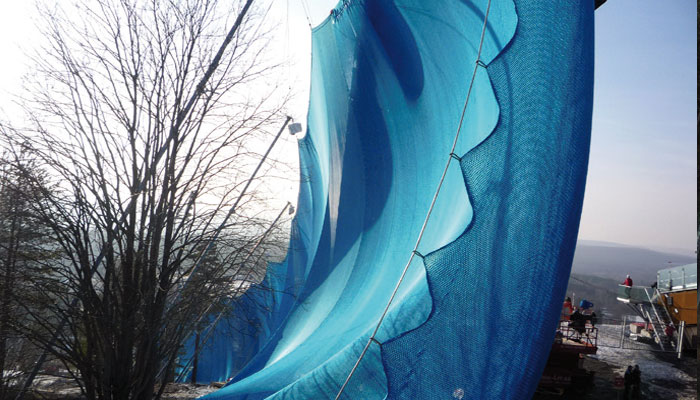
ALPINA has proven its know-how and project competence worldwide as the ideal partner for the planning of multi-functional systems. The wind nets have been in use since January 2009 until today, from Bergisel to Garmisch-Partenkirchen and Kulm to the 2014 Winter Olympics in Sochi, where special anchors had to be created for the unstable subsurface. Gigantic areas of up to 2,700 m² net area reduce the critical wind speeds and, as a result, allow competitions to be held under previously impossible conditions.